Meet the people
Start with the public directory, then open a founder's individual page.
Explore foundersTPFN ORIGINAL THE NETWORK ISSUE / 2026
Where should you begin inside The Pakistan Founders Network? This original field map helps readers navigate the public founder directory, inspect linked work and follow sourced stories without confusing discovery with endorsement or verification.
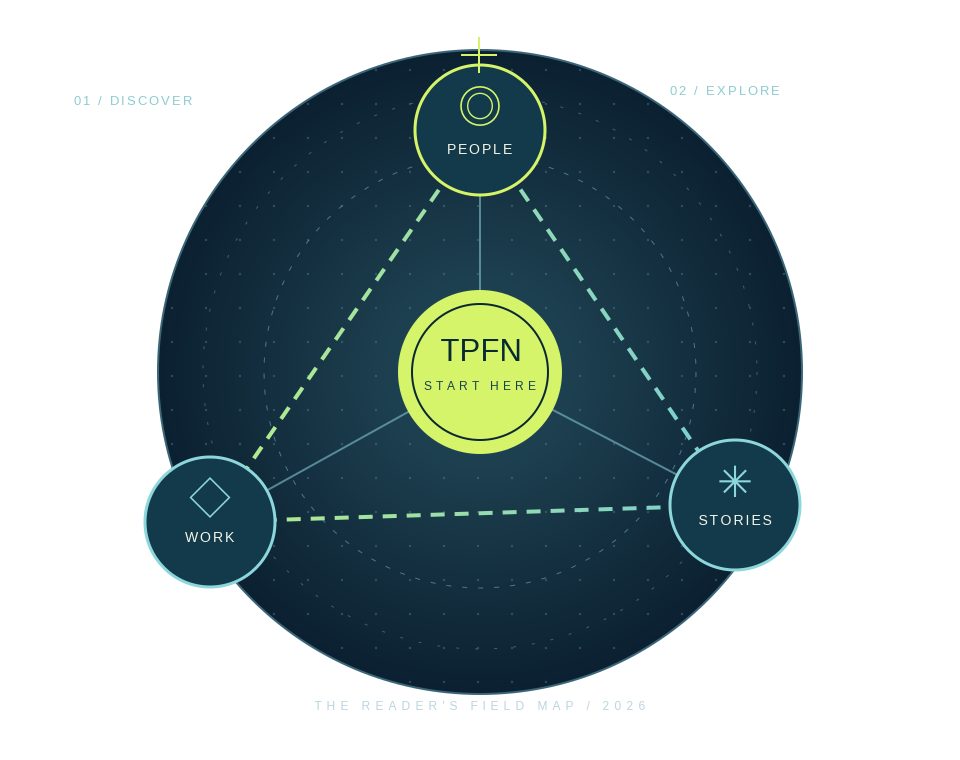
The Pakistan Founders Network has several ways to explore builders and their work. This interactive field map shows where to start, what to check and what not to assume.
The Pakistan Founders Network makes founder profiles and editorial stories discoverable. This compass helps readers move through those public pages thoughtfully. It is not an investor screening tool, an independently verified startup registry or a promise of direct introductions.
Start with the public directory, then open a founder's individual page.
Explore foundersFollow linked projects and distinguish a description from independently inspectable work.
Use the directory guideUse the journal for fuller stories, dates, sources and editorial limitations.
Read the journalChoose your reason for exploring. The compass changes its suggested path, without tracking your choice or contacting anyone.
Start broad. Read one public founder profile, follow an actual linked project and write down what you still need to verify.
Four practical chapters. No invented success stories, rankings or private founder information.
01 / KNOW THE TERRAIN
TPFN's public founder directory offers a starting point for discovering people and their work. Its individual pages provide a closer look at the builders presented on the site, while the stories journal gives readers space to explore selected projects and narratives in greater depth. These are different editorial surfaces with different levels of context, so a reader should not expect each page to answer the same question.
A listed founder is not automatically a vetted investment opportunity, a certified professional or a guarantee of business success. TPFN's directory guide explicitly distinguishes an editorial collection from a ranking, a government registry and a complete census of Pakistani startups. Treat the directory as a useful route into further investigation rather than an endorsement of every statement appearing in a profile.
The practical first move is to choose the right entry point. If you need to discover a person, begin with the founder directory. If you need to understand an idea or decision, look for a longer story. If you need to evaluate a claim, find its attributed source and the original work behind it before deciding what it proves.
02 / CHOOSE YOUR DIRECTION
A curious reader, a potential collaborator and a researcher may visit the same founder profile for very different reasons. A reader might want to understand why a venture exists. A collaborator may want to see what skills or public projects a builder has shown. A researcher may need dates, source links and a clear distinction between reported facts and aspirations. Defining that question first prevents the search from becoming a popularity contest.
Use the interactive route desk above to select a reading path. It does not collect contact details, promise introductions or score founders. It simply maps each purpose to public TPFN pages and a short sequence of questions. A well-chosen route is more useful than scrolling through every name while assuming that the most polished presentation represents the most substantial work.
For example, someone interested in a project's development should seek a project page, product demonstration, public release or founder-attributed account, if one is available. If those artifacts are absent, record the gap rather than inventing a story about progress. An honest unknown is a better research result than a confident guess.
03 / FOLLOW THE EVIDENCE
A public profile can describe a product, but a description and a working product are not identical forms of evidence. Read what the page actually says, note the date of any milestone and follow the links provided by the founder or publisher. A launch announcement, a live product and an independently measured customer result answer different questions, and none should be silently substituted for another.
Longer editorial stories can supply context that a compact profile cannot. Look for a source note that explains whether a detail came from a founder-submitted account, an official company page or independent reporting. The source should support the precise claim being made. An external link by itself is not a verification badge, and a quotation should not be presented as independently confirmed merely because it appears on a polished page.
If you are documenting a founder for an article, keep a simple evidence trail: claim, date, source, what the source actually establishes and what remains unknown. This approach protects readers from exaggerated certainty and gives founders a fairer representation of work that may still be in progress.
04 / MAKE A MEANINGFUL NEXT MOVE
Finding an interesting builder is only the beginning of a responsible introduction. If a founder has published a contact method, use that stated route and be specific about why you are writing. Explain which public project or story you read and what useful question or proposal you have. Do not assume that appearing in a directory makes someone's private contact details available or means that they have agreed to unsolicited pitches.
TPFN's public pages can help you identify people and explore published stories, but this article does not claim that the site currently offers automatic matchmaking, verified business introductions or investment due diligence. Those would be separate products with their own evidence and consent requirements. A directory should not be credited with features merely because other platforms in the startup ecosystem advertise them.
Close your reading session by writing one next action: open a linked artifact, read a sourced story, compare a founder's own statement with another public source or send a respectful note through an explicitly published channel. The point of the compass is not to deliver a ranking. It is to help each reader move from discovery toward a better-informed question.
This original guide was researched from TPFN's published founder-directory route, its Pakistani-founders editorial sourcing guide and its public stories route as documented on 20 October 2026. It is not an audit of individual founders, a matchmaking offer or a ranking. The network illustration is a conceptual original artwork, not measured data. External directory sites informed search-intent analysis only and are not presented as sources for TPFN claims.
The schematic network artwork was authored for this TPFN story. It depicts an editorial reading journey, not measured relationships or geographic locations.